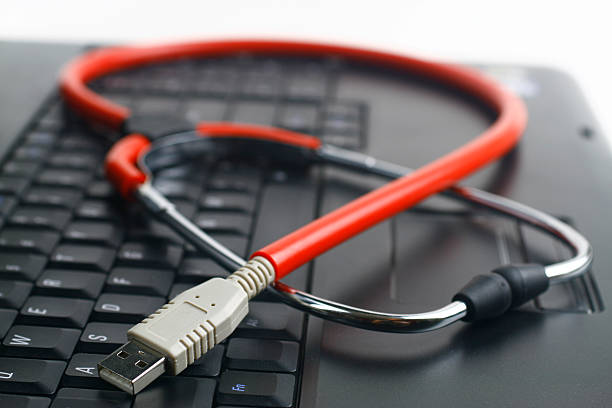
A USB stethoscope is a modern medical device that enhances traditional auscultation by allowing healthcare providers to record, analyze, and transmit heart and lung sounds digitally. It connects to a computer, smartphone, or tablet via USB or Bluetooth, making it an essential tool for telemedicine, medical training, and remote patient monitoring.
In the Philippines, where telehealth services are expanding, USB stethoscopes provide a reliable solution for healthcare professionals, especially those serving rural areas. With better connectivity and digital features, these devices improve diagnostic accuracy and facilitate remote consultations.
What is a USB Stethoscope?
A USB stethoscope is an electronic stethoscope that converts acoustic sound waves into digital signals. This allows medical professionals to enhance sound clarity, record auscultations, and share data for better diagnosis. Unlike traditional stethoscopes, which rely solely on acoustic amplification, USB stethoscopes integrate advanced sound processing technology for improved detection of abnormalities.
Key Features of a USB Stethoscope
- Digital Sound Processing: Reduces background noise and enhances key frequencies.
- Recording and Playback: Allows doctors to save and analyze patient data.
- Telemedicine Compatibility: Supports remote consultations and diagnostics.
- AI Integration: Some models include artificial intelligence to detect abnormal heart and lung sounds.
- User-Friendly Interface: Easily connects to computers, smartphones, and medical software.
Comparison: USB Stethoscope vs. Traditional Stethoscope
Understanding the key differences between USB stethoscopes and traditional stethoscopes can help medical professionals and students make an informed choice.
| Feature | USB Stethoscope | Traditional Stethoscope |
| Sound Quality | Digital enhancement with noise reduction | Relies on natural acoustics |
| Recording Capability | Yes, can save and share recordings | No recording feature |
| Amplification | Adjustable, useful for hearing-impaired users | Limited by physical design |
| Telemedicine Use | Compatible with online consultations | Not suitable for remote diagnostics |
| Ease of Use | Requires a device for full functionality | Can be used anywhere without additional tools |
| Cost | Generally more expensive | More affordable |
For healthcare workers in the Philippines, USB stethoscopes offer greater flexibility in remote areas, where digital auscultation can help bridge the gap in healthcare accessibility.
Benefits of Using a USB Stethoscope
- Enhanced Sound Quality: USB stethoscopes use advanced digital processing to amplify heart and lung sounds, making it easier to detect subtle murmurs, wheezing, or irregular heartbeats that might be missed with a traditional stethoscope.
- Ideal for Telemedicine and Remote Healthcare: In the Philippines, telehealth is becoming a crucial part of medical services, especially in rural areas with limited access to hospitals. A USB stethoscope allows doctors to remotely assess patients by transmitting auscultation sounds over the internet.
- Recording and Data Sharing: Doctors can record patient sounds for future comparison or share them with specialists for a second opinion. This is particularly useful for teaching medical students or tracking chronic conditions.
- Suitable for Medical Education: Medical schools are increasingly using USB stethoscopes to train students with real-time sound visualization. Some models allow for waveform analysis, making it easier to understand different conditions.
- Helpful for Hearing-Impaired Medical Professionals: Since USB stethoscopes can digitally amplify sounds, they are beneficial for healthcare providers with hearing impairments. Some models also allow Bluetooth hearing aid connectivity.
Best USB Stethoscopes in 2024
Here are some of the top USB stethoscopes available today:
| USB Stethoscope | Features | Price Range |
| 3M Littmann Core Digital Stethoscope | Noise reduction, Bluetooth, AI analysis | High |
| Thinklabs One Digital Stethoscope | Compact, 100x amplification, works with headphones | High |
| Eko CORE Digital Stethoscope | AI-powered detection, telehealth integration | Medium |
| Cardionics E-Scope II | USB connectivity, adjustable volume | Low |
For hospitals and clinics in the Philippines, models like Eko CORE and Cardionics E-Scope II are affordable and ideal for remote diagnostics.
Who Should Use a USB Stethoscope?
A USB stethoscope is beneficial for:
- Doctors and Nurses: Ideal for daily auscultation with enhanced sound quality.
- Medical Students: Provides visual and audio learning experiences.
- Telemedicine Providers: Allows for remote consultations in rural areas.
- Hospitals and Clinics in the Philippines: Helps expand healthcare access in underserved regions.
How to Choose the Best USB Stethoscope
- Sound Quality: Look for high-fidelity audio and noise cancellation features to ensure clear auscultation.
- Compatibility: Ensure the stethoscope works with multiple devices like PCs, tablets, and smartphones.
- Portability: Some USB stethoscopes are bulkier than traditional ones, so choose a compact and lightweight model for ease of use.
- Price and Budget: High-end models offer AI analysis and telemedicine features, but affordable options still provide good digital sound quality.
- Battery Life: Some USB stethoscopes require charging, while others function with wired connectivity. Choose a model that suits your workflow and needs.
Challenges and Limitations of USB Stethoscopes
While USB stethoscopes offer many advantages, they also have some limitations:
- Higher Cost – More expensive than traditional stethoscopes.
- Technology Dependency – Requires a smart device or computer for full functionality.
- Battery Life Issues – Wireless models may need frequent charging.
- Learning Curve – Some healthcare professionals may require training to use advanced features effectively.
Despite these challenges, the benefits outweigh the drawbacks, particularly for telemedicine and medical education.
Conclusion
A USB stethoscope is a revolutionary tool that enhances medical diagnostics through digital sound processing, recording capabilities, and telemedicine integration. It is particularly beneficial in the Philippines, where remote healthcare is expanding, making it easier for doctors to serve patients in rural communities.
By investing in a high-quality USB stethoscope, healthcare professionals can improve patient care, enhance learning experiences, and participate in the future of digital medicine.