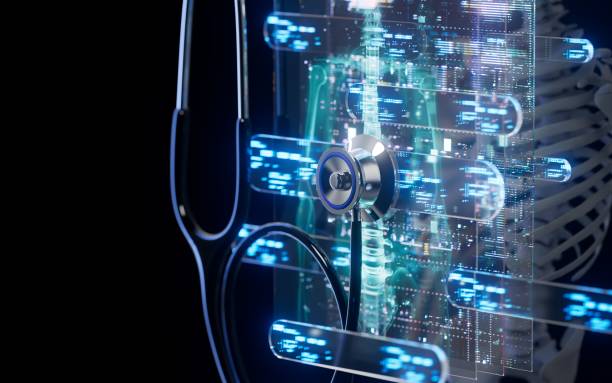
Artificial Intelligence (AI) is revolutionizing healthcare tools, including the humble stethoscope. By integrating advanced algorithms into stethoscope devices, AI enhances diagnostic accuracy, speeds up treatment processes, and assists doctors in making informed decisions. Let’s explore the role of artificial intelligence in stethoscope analysis, how AI-powered stethoscopes work, why they matter, and their impact on healthcare.
How AI Transforms Stethoscope Analysis
Traditional stethoscopes rely solely on the doctor’s ability to interpret sounds from the heart and lungs. While effective, this method depends heavily on experience, which may lead to missed diagnoses.
AI-powered stethoscopes go beyond listening—they analyze. By using machine learning, they compare heartbeats and lung sounds against a vast database of normal and abnormal patterns.
For example:
- Heart Murmurs: AI can detect murmurs and categorize them as harmless or dangerous.
- Respiratory Disorders: AI systems identify wheezing or crackling sounds, often missed in the early stages of conditions like pneumonia.
- Real-Time Analysis: These stethoscopes provide instant feedback to doctors, suggesting potential issues.
Why Is Artificial Intelligence Important in Healthcare?
AI plays a vital role in modern healthcare for several reasons:

- Accuracy: AI reduces the chance of misdiagnosis by using data-backed insights.
- Efficiency: It helps doctors save time by offering real-time diagnoses, allowing them to focus on treatments.
- Accessibility: AI bridges the gap in areas with limited healthcare by enabling remote diagnosis.
In stethoscope analysis, AI ensures even minor abnormalities are detected early. This can prevent life-threatening complications and lower healthcare costs in the long run.
Advantages and Disadvantages of AI in Stethoscope Analysis
To understand its full impact, it’s essential to evaluate the benefits and challenges of AI-powered stethoscopes:
| Advantages | Disadvantages |
| Increases diagnostic precision, reducing human error | High costs make it less accessible in low-income areas |
| Detects early-stage diseases for timely treatment | Requires training to interpret AI results |
| Provides real-time, actionable insights | Potential for data breaches and privacy issues |
| Reduces doctors’ workload | This may lead to over-reliance on technology |
AI makes stethoscopes smarter and more efficient, but its implementation requires careful consideration of costs and ethics.
The Scope of Artificial Intelligence in Healthcare
AI’s role in healthcare extends far beyond stethoscope analysis. Its applications include:
- Medical Imaging: AI improves the accuracy of scans like X-rays, MRIs, and CTs.
- Personalized Medicine: AI analyzes patient data to recommend tailored treatments.
- Remote Monitoring: Wearable devices use AI to track vitals and alert doctors to irregularities.
- Administrative Tasks: AI reduces paperwork by automating processes like patient data entry.
In stethoscope analysis, AI serves as a critical tool, ensuring precise and reliable diagnoses while reducing the workload for healthcare professionals.
The Role of AI in Psychology and Microbiology
AI isn’t just changing general healthcare—it’s transforming specialized fields too:
Psychology
- AI tools analyze speech patterns and facial expressions to detect mental health issues like depression or anxiety.
- Apps provide personalized therapy plans based on user data.
Microbiology
- AI accelerates the detection of harmful bacteria and viruses in samples.
- It predicts antibiotic resistance patterns, helping doctors prescribe effective treatments.
These advancements show how AI impacts every corner of healthcare, including mental health and laboratory sciences.
Stethoscope Advantages and Disadvantages in Healthcare
Traditional stethoscopes are reliable, but their AI-powered counterparts take things to another level. Here’s a detailed look at both:
Traditional Stethoscopes
- Advantages: Affordable, easy to use, and widely available.
- Disadvantages: Relies heavily on doctor expertise, which may result in missed subtle abnormalities.
AI-Powered Stethoscopes
- Advantages: Enhances accuracy, provides instant feedback, and aids in remote diagnoses.
- Disadvantages: Expensive, requires technical skills, and depends on consistent software updates.
What Is the Role of AI in Healthcare?
AI’s role in healthcare is transformative. It bridges gaps in diagnosis and treatment, making healthcare systems faster and more reliable. AI-powered stethoscopes are just one example, showcasing the potential of technology to assist in routine check-ups and critical emergencies.

Key highlights of AI in healthcare include:
- Predictive Analysis: AI predicts disease risks based on patient history.
- Diagnostic Assistance: It identifies patterns in medical data for accurate diagnosis.
- Operational Efficiency: AI automates tasks, freeing up time for doctors to focus on patients.
How Does AI Enhance the Role of Stethoscopes?
AI-powered stethoscopes integrate advanced features that benefit both doctors and patients:
- Noise Filtering: AI removes background noise, making it easier to hear subtle sounds.
- Cloud Storage: Doctors can save and share recordings for consultation.
- Data Comparison: The stethoscope’s AI compares patient data with global databases, offering precise diagnoses.
These features make the stethoscope a critical tool for modern healthcare, improving efficiency and outcomes.
Conclusion: The Future of AI in Stethoscope Analysis
AI is shaping the future of stethoscope analysis by making it more accurate, efficient, and accessible. It addresses the limitations of traditional methods and equips healthcare professionals with better tools to improve patient care. As AI technology evolves, stethoscopes will continue to play a vital role in early detection and diagnosis.
Investing in AI-powered tools is crucial for the future of healthcare. From identifying early signs of disease to assisting doctors in remote areas, AI ensures better outcomes for everyone.