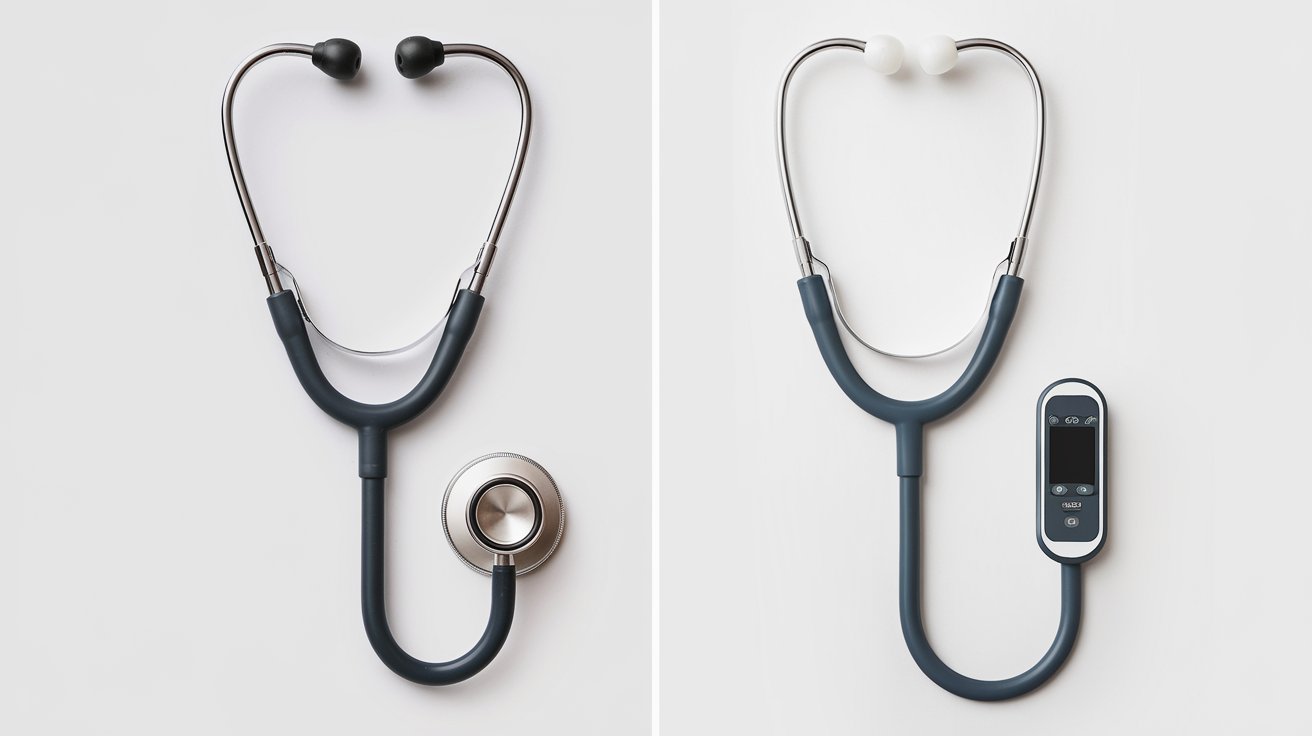
Choosing the right stethoscope is crucial for healthcare professionals. Whether you’re a student, nurse, or doctor, understanding the difference between acoustic vs. electronic stethoscopes will help you pick the right tool for your needs. Both types offer unique features and benefits, but they cater to different preferences and specialties.
Let’s explore their differences in detail and help you make the best choice.
What is an Acoustic Stethoscope?
An acoustic stethoscope is the traditional, manual stethoscope most people recognize. It uses hollow tubing to carry sound from the patient’s body to your ears without requiring batteries or any electronic components.

Key Features
- Sound Transmission: Relies on natural sound waves traveling through the tubes.
- Simple Design: Lightweight and easy to carry around.
- No Power Required: Functions entirely without electricity.
Advantages
- Affordable: These stethoscopes are budget-friendly, making them perfect for beginners. For example, the Littmann stethoscope offers some of the best acoustic models for students and nurses.
- Durable: Their simple design means fewer parts can break, making them last longer.
- Widely Used: Ideal for general checkups and routine diagnostics.
Best For:
- Medical students learn to perform basic assessments.
- Nurses and general practitioners conduct daily patient evaluations.
What is an Electronic Stethoscope?
Electronic stethoscopes are modern devices equipped with advanced technology. They amplify body sounds, making it easier to hear faint noises like subtle heart murmurs. These stethoscopes convert sound into digital signals, which can then be enhanced or recorded.

Key Features
- Amplification: Magnifies sound to improve clarity.
- Noise Cancellation: Filters out background noise, making it easier to focus on specific sounds.
- Advanced Technology: Includes features like Bluetooth connectivity and sound recording.
Advantages
- Enhanced Hearing: Perfect for hearing faint or irregular sounds that are difficult to detect with an acoustic stethoscope.
- Tech Features: Some models allow you to record and store sounds, making them ideal for teaching or remote consultations.
- Noise Reduction: Removes external noise for a clearer listening experience.
Best For:
- ICU nurses who need to monitor critically ill patients.
- Cardiologists and pulmonologists who require precise diagnostic tools.
- Telemedicine providers who share audio files with other specialists.
Acoustic vs. Electronic Stethoscopes: A Detailed Comparison
| Feature | Acoustic Stethoscope | Electronic Stethoscope |
| Price | Affordable; usually $50–$200 | Expensive; can range from $300–$1,000+ |
| Sound Quality | Relies on natural amplification | Amplifies and enhances sound |
| Durability | Simple, long-lasting design | Sensitive to damage due to electronics |
| Features | Basic, no additional tech | Advanced features like recording and sharing |
| Power Source | None; manual | Requires batteries or charging |
| Best Use | General diagnostics | Specialized fields like cardiology and ICU |
How to Choose the Right Stethoscope
Choosing between an acoustic and an electronic stethoscope depends on several factors. Here’s what to consider:
1. Your Role and Specialty
- For Students: If you’re a medical student, start with an acoustic stethoscope. It’s affordable and easy to use. Look for models like the best stethoscope for medical students, such as Littmann’s entry-level options.
- For Nurses: Nurses working in high-pressure environments like ICUs or pediatrics might prefer electronic stethoscopes. The best stethoscope for ICU nurses or the best stethoscope for pediatric nurses often includes noise cancellation and amplification.
- For Cardiologists: Professionals diagnosing complex heart conditions will benefit from the precision of electronic stethoscopes.
2. Your Budget
- Acoustic stethoscopes are more affordable and accessible for beginners.
- Electronic stethoscopes are more expensive, but their advanced features justify the price. This answers a common question: Why are stethoscopes so expensive? Advanced technology and amplification capabilities increase their cost.
3. Brand and Quality
- Comparing ADC stethoscope vs. Littmann models reveals Littmann stethoscopes are often considered superior in terms of sound quality and durability. However, ADC stethoscopes are reliable budget-friendly alternatives.
Which Stethoscope is Right for You?
Your decision comes down to your specific needs. Here’s a quick guide:
- Choose Acoustic Stethoscopes if:
- You’re a beginner or work in general medicine.
- You prefer a lightweight, affordable, and reliable tool.
- Choose Electronic Stethoscopes if:
- You work in a specialized field like cardiology, ICU, or telemedicine.
- You need amplified sound and noise reduction for accurate diagnoses.
Tips for Maintaining Your Stethoscope
No matter which type you choose, taking care of your stethoscope ensures it lasts longer. Here are some simple tips:
- Clean the tubing and chest piece regularly with alcohol wipes.
- Avoid exposing your stethoscope to extreme heat or moisture.
- Store it in a protective case when not in use.
Conclusion: Which Stethoscope Fits Your Needs?
Choosing between an acoustic Vs. electronic stethoscope depends on your role, budget, and preferences. Acoustic stethoscopes are great for beginners or those looking for simple, affordable tools. Meanwhile, electronic stethoscopes excel in advanced settings, offering amplification and noise reduction for precise diagnoses.
Take the time to evaluate your needs, and invest in a stethoscope that helps you provide the best care. Whether you’re a student, nurse, or specialist, the right stethoscope can make all the difference in your work.