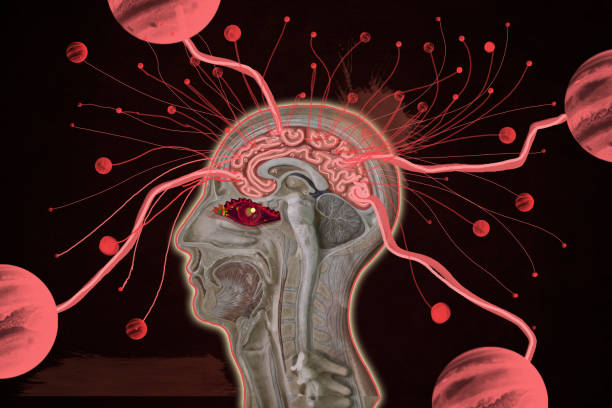
A subarachnoid hemorrhage (SAH) is a life-threatening condition caused by bleeding in the brain. Early diagnosis is critical to prevent severe complications. While modern imaging techniques are the gold standard, a stethoscope—a common medical tool—can offer initial clues in identifying SAH.
This article dives deeper into how a stethoscope can help detect SAH, its limitations, and complementary diagnostic methods.
What Is a Subarachnoid Hemorrhage (SAH)?
A subarachnoid hemorrhage occurs when blood leaks into the space between the brain and its protective covering, the arachnoid membrane. This type of bleeding is usually caused by a ruptured aneurysm, which is a weak spot in a blood vessel wall.
Common Symptoms of SAH
SAH symptoms often appear suddenly and can include:
- Severe headache: Described as the “worst headache of your life.”
- Neck stiffness: Caused by irritation of the meninges (brain coverings).
- Nausea and vomiting: A response to increased pressure in the brain.
- Sensitivity to light (photophobia): Due to irritation of the meninges.
- Loss of consciousness: In severe cases, a person may faint or remain unconscious.
These symptoms are medical emergencies and require immediate attention.
Using a Stethoscope to Detect Subarachnoid Hemorrhage
While a stethoscope is not a definitive diagnostic tool for SAH, it provides valuable preliminary information. Here’s how doctors use it:

1. Listening for a Bruit
A bruit is an abnormal swishing or whooshing sound heard over arteries. It is caused by turbulent blood flow and can indicate vascular abnormalities like aneurysms or arteriovenous malformations (AVMs), which are risk factors for SAH.
- Where doctors listen:
- Neck (carotid arteries)
- Skull (over major cranial arteries)
Hearing a bruit might suggest the presence of an aneurysm that could rupture and lead to SAH.
2. Monitoring Heartbeat Changes
SAH can sometimes trigger irregular heart rhythms or elevated heart rates due to the body’s response to bleeding and increased brain pressure. A stethoscope helps detect these changes.
3. Detecting Lung Abnormalities
If SAH causes complications like pulmonary edema (fluid in the lungs), doctors might hear crackling sounds when listening to the chest with a stethoscope. This finding could be part of the overall picture when diagnosing SAH.
Limitations of Using a Stethoscope for SAH
While a stethoscope is accessible and easy to use, it has significant limitations when diagnosing SAH:
- Low specificity: It cannot directly detect bleeding in the brain.
- Requires clinical skill: Accurate interpretation of bruits and heart sounds depends on the examiner’s expertise.
- Not definitive: A bruit or irregular heartbeat might indicate other conditions unrelated to SAH.
Thus, while a stethoscope can help with the initial assessment, further testing is always needed.
Advanced Diagnostic Tools for Subarachnoid Hemorrhage
When a stethoscope provides clues or when symptoms strongly suggest SAH, doctors turn to advanced methods for confirmation:
1. CT Scan (Computed Tomography)
- How it works: A CT scan uses X-rays to create detailed images of the brain.
- Why it’s effective: It detects bleeding quickly and is considered the first-line test for SAH.
- Accuracy: Highly effective within the first 24 hours after symptoms start.
2. Lumbar Puncture (Spinal Tap)
- How it works: A needle is inserted into the lower back to collect cerebrospinal fluid (CSF).
- Why it’s used: If a CT scan is inconclusive, this test checks for blood in the CSF, a clear sign of SAH.
- Accuracy: Extremely reliable when done correctly.
3. MRI (Magnetic Resonance Imaging)
- How it works: MRI uses strong magnetic fields and radio waves to create detailed images of the brain.
- Why it’s useful: It can detect smaller bleeds and provide more detailed images than a CT scan in certain cases.
4. Cerebral Angiography
- How it works: A contrast dye is injected into the blood vessels, and X-rays are taken to visualize blood flow.
- Why it’s critical: This test is the gold standard for identifying aneurysms or vascular malformations causing SAH.
Comparing Diagnostic Methods
To better understand the roles of these tools, here’s a comparison table:
| Diagnostic Tool | Purpose | Advantages | Limitations |
| Stethoscope | Initial screening of vascular sounds | Non-invasive, quick, and accessible | Low accuracy, not definitive |
| CT Scan | Detects brain bleeding | Fast and widely available | May miss small or old bleeds |
| Lumbar Puncture | Identifies blood in CSF | Highly accurate for SAH | Invasive, requires expertise |
| MRI | Detailed brain imaging | Detects small or subtle abnormalities | Expensive and less available |
| Cerebral Angiography | Visualizes blood vessels | The gold standard for aneurysm detection | Invasive and time-consuming |
The Role of a Stethoscope in Neurological Exams
Despite its limitations, a stethoscope is a key tool in neurological exams. It helps doctors:
- Assess blood flow: By detecting bruits, which can point to vascular problems.
- Check heart and lung health: These can show stress or complications related to SAH.
- Guide further testing: Stethoscope findings may prompt urgent imaging tests.
Conclusion
While a stethoscope can’t diagnose a subarachnoid hemorrhage on its own, it plays a vital role in initial screening. Its ability to pick up unusual vascular sounds or heart irregularities provides clues that guide further investigation. However, always rely on advanced imaging and expert evaluation to confirm and treat SAH.
By understanding the strengths and limitations of a stethoscope, you can better appreciate its role in medical care. If you suspect SAH, don’t wait—seek professional help right away. Early action can make all the difference.